Engineering from first principles. Then in Python.
University-level courses in orbital mechanics and numerical analysis. Every lesson has derivations you can follow, an interactive visualization, a quiz and Python labs you run in the browser — and in Orbital Mechanics, a film to open it.
Each one runs from the first idea to methods used in real engineering work, one derived result at a time.
Live · free
Aerospace
Orbital Mechanics
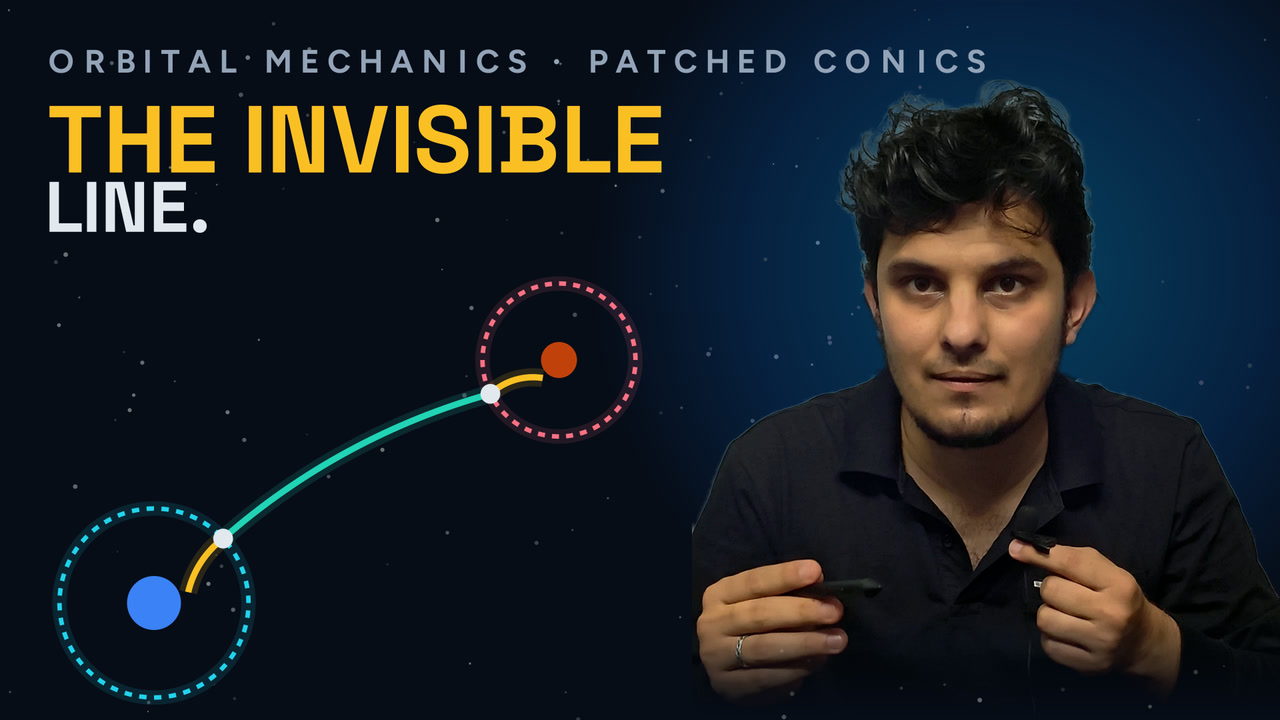
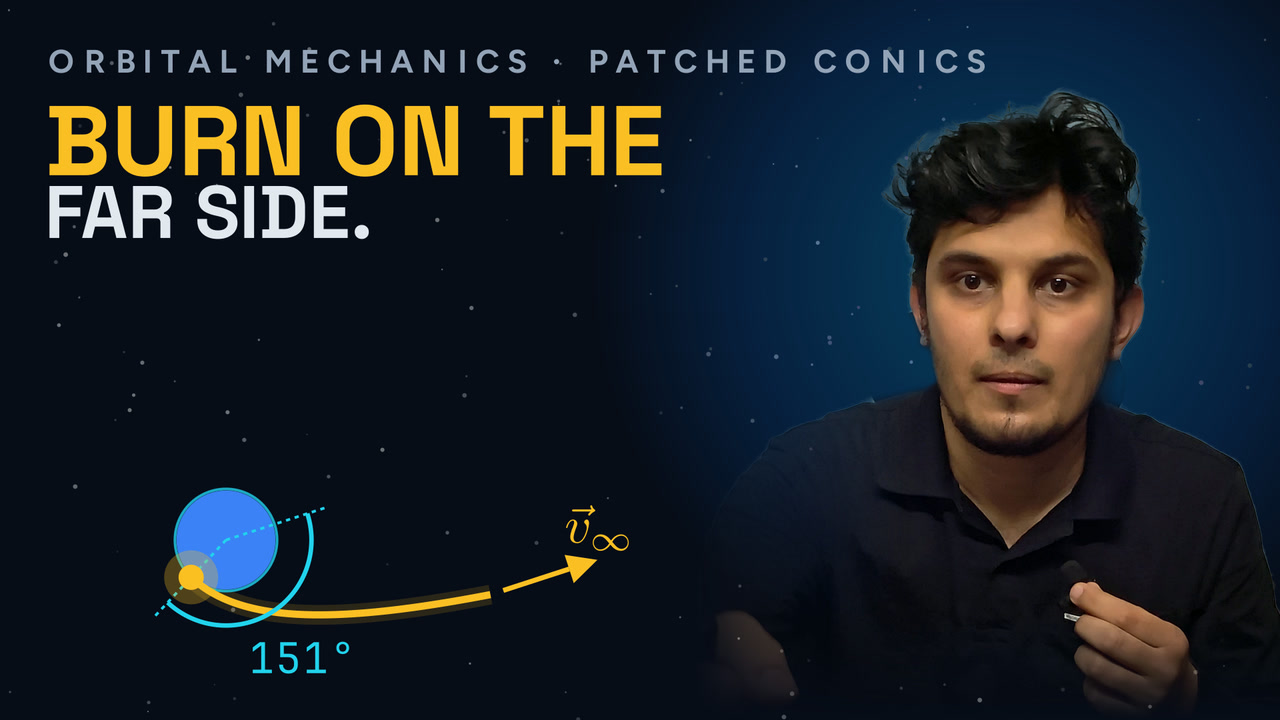
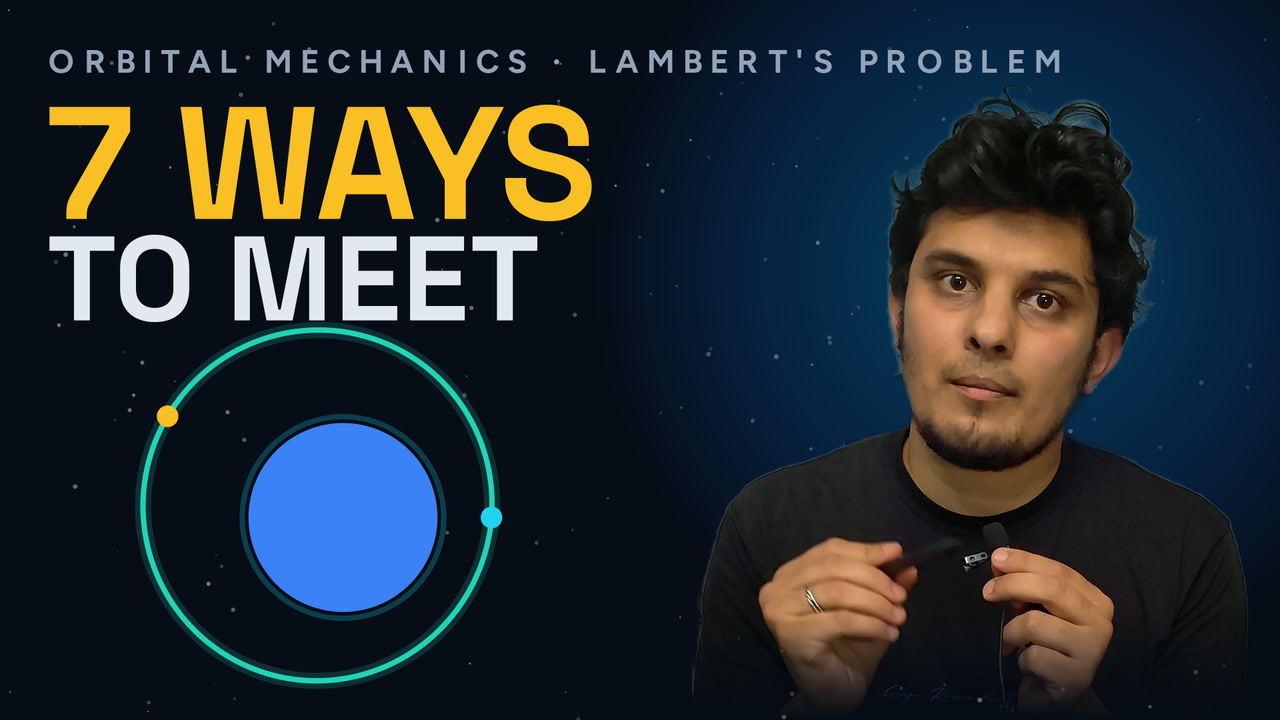
Newton’s laws to interplanetary departure: elements and frames, Kepler’s equation, manoeuvres, perturbations, Lambert’s problem and patched conics — each lesson opens with a film.
How computers really do mathematics: rounding and stability, equations and linear systems, eigenvalues, quadrature, ODEs, PDEs and the finite element method — with every formula derived.
The same rhythm in every lesson, so you always know what comes next.
01
Begin
Each lesson opens with a real event — a mission, a failure, a discovery. In Orbital Mechanics it is a film.
02
Read
The theory, with every formula derived on the page. No result appears from nowhere.
03
Explore
An interactive visualization: move the sliders and watch the mathematics respond.
04
Check
A quiz that explains every answer, so a wrong one still teaches you something.
05
Build
Python labs with NumPy and SciPy that you write and run in the browser, checked automatically.
Your instructor
Shoaib Aziz
Every Orbital Mechanics lesson opens with a film Shoaib presents, from Newton’s Moon test to the burn that leaves Earth for another planet. The films are also on YouTube; the courses here add the derivations, visualizations, quizzes and labs.
Coming soon
In preparation
Tell us which one you want first. We will email you once when it opens, and nothing else.
Analog Electronics Applications
Electronics
Fundamentals of design and analysis — from diodes to op-amps to complete systems
Structural Engineering (RCC)
Civil Engineering
Design of beams, slabs, columns, and foundations per IS 456:2000 — with Python labs
Hydraulic Engineering
Civil Engineering
Open channel flow, gradually varied flow, hydraulic jumps, turbines, and pumps — with Python labs
Power Electronics
Electronics
Thyristors, converters, choppers, inverters, motor drives — from device physics to industrial applications, with Python labs
Signals and Systems
EE / Signal Processing
Fourier, Laplace, z-transform, digital filters, sampling — from first principles to real-world signal processing
Digital Electronics
Electronics
Number systems, logic gates, Boolean algebra, combinational & sequential circuits, microprocessors — with Python labs
Theory and Construction of Aircraft Engines
Aerospace
Gas dynamics, Brayton cycles, nozzles, combustion, and engine matching — from first principles to GE9X and beyond
Optimal Guidance and Optimal Control
Aerospace / Controls
Trajectory optimization, convex programming, SCP, and computational guidance for aerospace vehicles
Principle of Navigation
Aerospace / Navigation
From dead reckoning to GNSS — time systems, satellite orbits, GPS signals, positioning, and high-precision augmentation
FAQ
Questions
Is it really free?+
Yes. During the public beta both live courses are free in full — films, theory, quizzes and labs.
Do I need an account?+
No. Open a course and start. Sign in only if you want your progress saved across devices.
What background do I need?+
First-year university calculus and some physics. The labs give you starter code and hints, so a little Python is enough to begin.
Which languages are the courses in?+
English for now. More languages are planned.
Can I learn on my phone?+
The films, theory and quizzes work on a phone. The Python labs are much easier on a computer.